

For B2B companies, LinkedIn is where buyers, partners, future hires and industry peers spend their professional time online. But simply having a company page is not enough. Without a clear LinkedIn content strategy, posts can feel random, engagement stays low and it becomes hard to show any business value from the effort.
A good strategy changes that. It connects what you publish to real business goals, gives your team a repeatable process and helps your brand become a trusted voice in your space. This guide breaks the process into practical steps any B2B marketing team can follow.
Why B2B brands need a LinkedIn content strategy
B2B buying decisions often involve several people and a long consideration period. During that time, buyers research quietly, compare options and look for signals that a company understands their problems. LinkedIn content can provide those signals long before a sales conversation begins.
A documented strategy helps you:
- Stay consistent, so your brand remains visible throughout long buying cycles.
- Focus on topics your buyers actually care about, rather than internal announcements alone.
- Coordinate company page content with posts from leaders and employees.
- Measure progress against goals instead of relying on gut feeling.
Define goals and know your audience
Set goals that tie to the business
Start by deciding what LinkedIn should achieve for you. Common B2B goals include building brand awareness in a target industry, positioning your team as experts, generating leads or demo requests, supporting recruitment and nurturing existing customers. Pick one or two primary goals so your content has a clear direction.
Get specific about who you are talking to
Describe the roles, seniority levels and industries you want to reach. Then dig into what keeps them busy: the challenges they face, the questions they ask during sales calls and the trends shaping their work. Your sales and customer success teams are an excellent source of insight here, because they hear these questions every day.
Build content pillars around buyer needs
Content pillars are the core themes your brand will be known for. Three to five pillars usually give enough variety without diluting your message. For a B2B brand, strong pillars often include:
- Industry insight: your perspective on trends, changes and challenges in your market.
- Practical education: how-to advice, frameworks and lessons that help buyers do their jobs better.
- Proof and results: case examples, product use cases and the outcomes your work supports, shared with permission.
- Company culture: the people, values and behind-the-scenes moments that make your brand human.
- Product and updates: launches and improvements, framed around the problems they solve.
Aim for a balance where helpful, educational content clearly outweighs direct promotion. Buyers tend to engage with brands that teach them something, not brands that only talk about themselves.
Choose the right LinkedIn content formats
LinkedIn supports a range of formats, and each suits different goals:
Text posts
Simple text posts are ideal for sharing opinions, lessons and short stories. A sharp opening line matters because only the first few lines show before "see more".
Document and carousel posts
Multi-page documents work well for frameworks, checklists and step-by-step guides. They are easy to skim and often get saved for later.
Images and short videos
Visuals help posts stand out in the feed. Short videos featuring real team members can be especially effective for building trust.
Articles and newsletters
Long-form formats suit deeper thought leadership and can help you build a regular readership over time.
Test several formats, then lean into the ones that perform best with your audience.
Add employee and leadership voices
On LinkedIn, people often connect more readily with individuals than with logos. Posts from founders, executives and subject-matter experts can reach audiences that a company page alone might not. Encourage team members to share their own perspectives on your content pillars, rather than simply resharing company posts.
Make it easy for them. Provide topic ideas, draft outlines and guidelines on tone, but let each person write in their own voice. Authenticity matters far more than polish. Celebrate contributions internally so participation feels rewarding rather than like an extra chore.
Create a consistent publishing workflow
Consistency is one of the biggest challenges for B2B teams, especially when several people need to review content. A simple workflow keeps things moving:
- Plan monthly: map topics across your pillars in a social media content calendar.
- Draft in batches: write several posts at once to save time and keep messaging aligned.
- Review and approve: agree who signs off on content, especially for regulated industries or sensitive topics.
- Schedule ahead: queue posts for times when your audience is likely to be active.
- Engage after publishing: reply to comments promptly to keep conversations going.
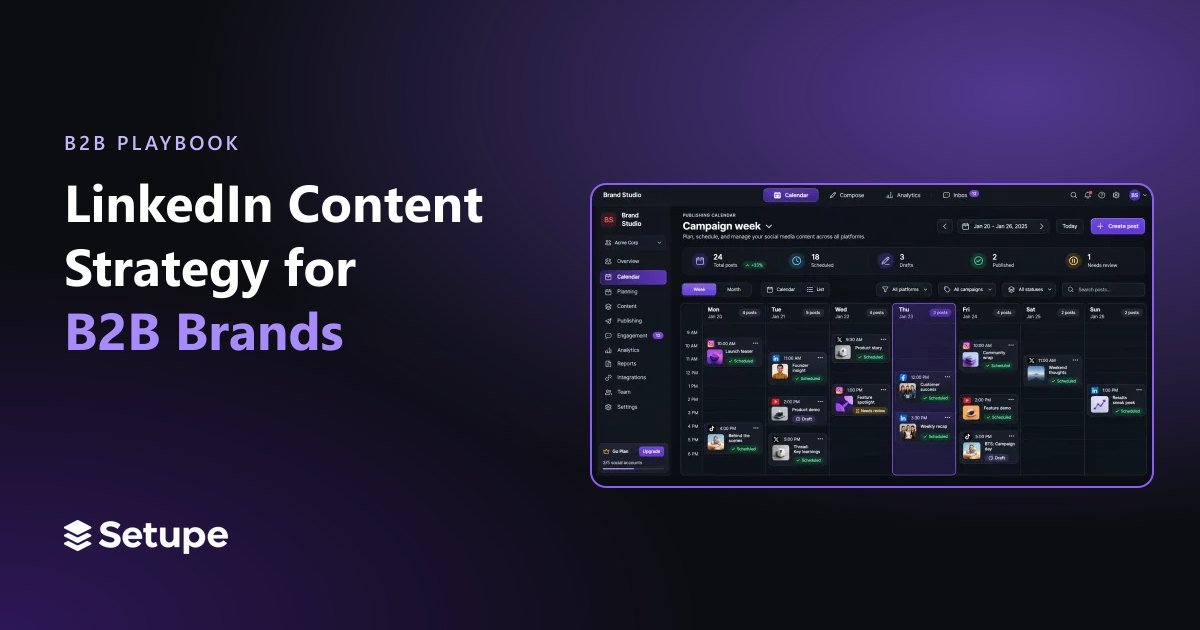
Setupe can support this process with team workspaces and approvals, so drafts move smoothly from writer to reviewer before they are scheduled. Its visual publishing calendar shows everything planned across channels, and the social inbox helps your team respond to comments and messages without switching between tools.
Measure what matters on LinkedIn
Vanity metrics only tell part of the story. For a B2B LinkedIn content strategy, track a mix of signals:
- Engagement rate: reactions, comments and shares relative to impressions.
- Follower growth: especially among your target industries and job roles.
- Click-throughs: visits to your website, landing pages or resources.
- Leads and conversations: inbound messages, demo requests and sales mentions of LinkedIn.
Review results monthly and use them to refine your pillars, formats and posting schedule. Analytics and reports in a tool like Setupe can make it easier to share progress with stakeholders.
Frequently asked questions
How often should a B2B brand post on LinkedIn?
Choose a frequency your team can sustain with quality content. Consistency over months usually matters more than posting as often as possible.
Should we focus on the company page or employee profiles?
Both play a role. The company page builds an official presence, while employee and leadership posts add reach and a human voice.
How long before a LinkedIn strategy shows results?
Building trust takes time. Expect to refine your approach over several months before drawing firm conclusions.
Conclusion
A strong LinkedIn content strategy helps B2B brands stay visible, build credibility and support the pipeline. Set clear goals, understand your buyers, publish helpful content across a few focused pillars, involve your people and keep measuring. Done consistently, LinkedIn can become one of your most valuable marketing channels.
Ready to bring your B2B content planning, approvals and publishing together? Create your Setupe account and build a LinkedIn presence your buyers trust.